
For more than a century, the Dutch driving licence has evolved alongside changes in mobility, technology, and security. What began as a simple paper permit that proved the right to operate a motor vehicle has evolved into a highly secure identity credential incorporating sophisticated security features.
For more than a century, the Dutch driving licence has evolved alongside changes in mobility, technology, and security. What began as a simple paper permit proving the right to operate a motor vehicle has become a highly secure identity credential incorporating sophisticated security features.
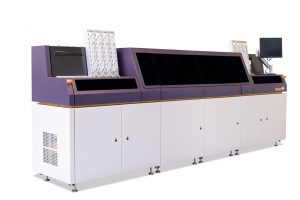
As the current provider of the Dutch driving licence, IAI is proud to have contributed to this evolution through advanced personalisation technologies and secure issuance solutions through our CardMaster® One.
1906: The first nationally recognised driving licence
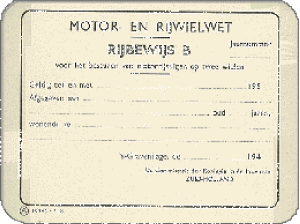
The first officially recognised driving licence valid throughout the Netherlands was introduced in 1906. At the time, the document’s purpose was simply to demonstrate that the holder was authorised to operate a vehicle.
These early documents were simple in both design and functionality. Issued on paper and containing limited information about the holder, they reflected a time when driving licences served a purely administrative function.
1951: The era of the pink driving licence
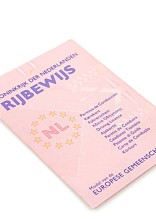
One of the most iconic chapters in Dutch driving licence history began in 1951 with the introduction of the famous roze rijbewijs, or pink driving licence.
More standardised than earlier versions, it provided a consistent national format at a time when car ownership was increasing rapidly across the Netherlands. Although effective for its time, counterfeiting methods continued to evolve, and the pink driving licence remained vulnerable to wear, damage, and fraud.
2006: A new generation of secure driving licences
On 1 October 2006, the Dutch driving licence transitioned from paper to a plastic card in credit card format.
The new model was easier to carry, more resistant to everyday wear, and better protected against tampering and fraud. Production of the document also became centralised, aligning it with the production model used for passports and national identity cards. Importantly, the design already anticipated the future introduction of a chip, demonstrating a forward-looking approach to document security.
2013–2014: European harmonisation and chip integration
The next significant evolution was driven by European regulation. On 19 January 2013, the Third European Driving Licence Directive introduced a new harmonised model across European countries. The Dutch driving licence adopted new design requirements, including the addition of a Machine Readable Zone (MRZ) and space for future technological enhancements.
Just over a year later, on 14 November 2014, Dutch driving licences began incorporating an embedded chip. The chip contains the same information that appears on the licence itself and is protected against remote reading. The new model also introduced additional security features, including a Sealys® Clear Window and a colour-changing hologram. Together, these elements represented a major advancement in the protection and verification of the document.
2018 to today: Expanding the role of the driving licence
As digital identity became increasingly important, the role of the driving licence expanded beyond proving entitlement to drive.
Driving licences issued from 26 May 2018 incorporated functionality that would later support secure digital identity verification. From 1 July 2023, eligible Dutch driving licences could be used to log in through DigiD for government, healthcare, and pension-related services, providing an additional layer of identity verification when accessing sensitive information online.
The latest generation of the Dutch driving licence was introduced on 1 June 2025. Through a longstanding partnership with RDW, IAI was honoured to deliver the personalisation infrastructure behind the programme, enabling the secure production of licences incorporating advanced solutions such as chip encoding, laser engraving, clear window engraving, and Multiple Laser Image (MLI) features. The result is a document that sets a new benchmark for security levels in global driving licences.
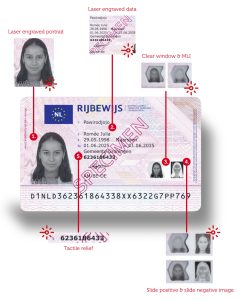
Overview of the Dutch Driving Licence
The history of the Dutch driving licence reflects more than changes in document design. It tells a story about trust, security, and innovation.
From the first nationally recognised licence issued in 1906 to today’s highly secure credential, each generation has introduced technologies designed to improve durability, authentication, and protection against counterfeiting. This demonstrates how continuous innovation helps protect identities and support a safer, more connected world.
For more information, please contact our Sales team.